"Records don't improve performance, intelligence does": FYLD's Shelley Copsey on bringing AI to highways
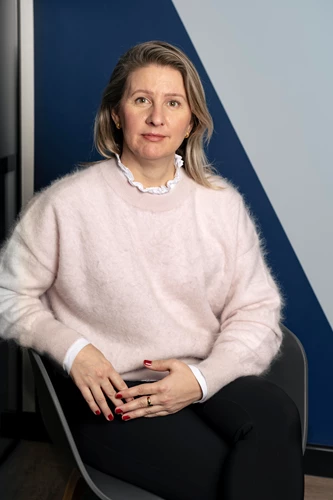
FYLD Co-founder and CEO Shelley Copsey explains how AI-native frontline intelligence is tackling standing time, rework and safety risk in highways - and why 2026 is the moment the industry is ready.
1. FYLD describes itself as an AI-native frontline intelligence platform - for a highways professional who hasn't come across you before, what does that actually mean in plain terms, and what problem does it solve?
At its simplest, FYLD turns what’s happening in the field into real-time operational intelligence, so managers can make faster decisions and crews can keep work moving. Today, there’s often a gap between what’s planned and what happens on-site. Updates are delayed, information is inconsistent, and supervisors are managing multiple crews with limited visibility. That’s what leads to rework, delays, and unnecessary disruption.
Instead of relying on paperwork, siloed tools, and end-of-day reports, field teams capture short videos and evidence as they start and progress through a job. Our AI helps them surface risk, quality issues, or potential delays as they’re happening. Remote managers get live visibility across multiple sites without needing to be physically present, can intervene quickly where needed, and everything is automatically documented for compliance.
In a highways scenario, that might look like a crew starting work on a busy roadside. As they record a quick video risk assessment, FYLD can flag missing signage, unsafe traffic management, or environmental risks immediately. A supervisor can then step in remotely to correct the issue before it causes delays that could impact delivery, or result in an incident. And at highways scale, this is where the impact really adds up. FYLD customers are seeing up to a 50% reduction in job blocker resolution time with our platform, meaning less standing around, fewer aborted works, and more jobs completed the first time across the network.
2. This is FYLD's first time at Traffex. You've built a strong presence in utilities and energy - what's bringing you into the highways and roads sector now, and what made 2026 the right moment?
Highways and roads are a natural area of focus for us because they sit at the heart of critical infrastructure.
There’s an increased demand in infrastructure today to deliver more, faster, and with greater accountability. But there’s also a growing disconnect between where decisions are made and what actually happens on site. In many cases, the issue is productivity. We see up to 30% of time on site lost to “standing time,” crews waiting, duplicating work, or dealing with avoidable issues. That’s a systems problem, and it represents a huge amount of untapped capacity.
In 2026, the industry is ready to address that gap. We’re seeing a shift from reactive to more predictive, data-driven ways of working, particularly in the UK, where major highways programmes are pushing for better visibility and execution in the field.
FYLD brings a proven approach into highways at a time when both the need and the appetite for change is there.
3. The Amey partnership was announced just weeks ago, specifically focused on transforming highways operations. What does that deployment look like on the ground, and what are you hoping it will demonstrate?
FYLD is now being fully integrated into how Amey’s highways division – more than 2,500 field workers – plans, executes, and manages essential maintenance and improvement works.
Their teams are incorporating FYLD into daily operations, meaning everything from pre-site inspections and start-of-shift briefings, to point-of-work risk assessments and job closure through the platform. Crews capture video as they work, AI identifies risks in real time, and supervisors have live visibility into what’s happening on a job site.
Amey are now targeting success metrics that our other customers are seeing within 12 months of full rollout, like 12% increase in productivity uplift, 15% reduction in rework, and up to 48% reduction in injuries and incidents.
4. FYLD just raised $41 million in a Series B. That's a significant vote of confidence - what does that investment mean for where the product goes next, and what does it say about appetite for this kind of technology right now?
FYLD is fast becoming the operating system of choice for high-risk field work. For us that means we’ll continue to spend time and innovate alongside our customers to evolve the product around the realities of how field work actually gets done.Our Series B investment allows us to expand our product capabilities, deepen our data advantage, and scale our presence globally, particularly in the U.S., where we see a huge opportunity to transform how critical infrastructure work is delivered.
More broadly, there’s growing recognition that the companies bringing intelligence into the field, where decisions get made and work actually happens, will define the next phase of the infrastructure buildout.
5. There's a phrase on your website that stuck with me: "records don't improve performance, intelligence does." That feels like a pointed challenge to how the industry currently operates. How much of what highways teams are doing today is record-keeping that isn't actually changing behaviour on site?
Organisations are doing their best to make the shift, but a lot of existing tooling out there is designed to create a record after the fact, rather than adjusting what happens in the moment. Those records matter for compliance, but they don’t necessarily change behaviour on site.
By the time something shows up in a report, the opportunity to intervene has usually passed.
A highways crew might complete a paper-based risk assessment before starting work on a roadside. But conditions on the network change constantly, whether due to traffic flow, weather, or an unexpected hazard, that original record doesn’t help the team adapt in real time to keep crews productive and safe.
How can crews gain the ability to see risks and make data-informed decisions in real-time? That’s what we mean by improving performance with intelligence.
6. The platform works for managers, field workers and contractors - three groups who often have quite different priorities and frustrations. How do you design something that genuinely serves all three rather than just ticking boxes for each?
Field workers want to get their job done safely and quickly so they can go home at the end of the day. We invest a lot of our efforts into being on-site with crews to understand and design FYLD around how they actually work: video and speech instead of typing, simple workflows, and tools that function even in low connection. If it slows them down or feels like admin, they won’t use it.
For managers, it’s about increasing visibility and spans of control without adding overhead. They’re responsible for large, distributed operations, but they can’t be everywhere at once. They need remote, real-time insight into what’s happening across sites, where the risks are, and so that they can intervene without spending their day chasing updates. FYLD gives them that.
Contractors and leadership prioritise consistency, compliance, and performance. They need confidence that work is consistently being delivered to standard, it’s auditable, and outcomes are improving over time. That’s where our data collection layer comes in: We’ve captured over 55 TB of execution-level data across 3.5 million job sites, creating one of the largest datasets on what it takes to deliver high-risk work.
But we don’t think of FYLD as three separate user experiences. Rather, it’s one connected operating system where solving the problem for the field worker unlocks value for managers and leadership.
7. You're operating in the US, UK and beyond - is the challenge of getting frontline infrastructure work done safely and efficiently fundamentally the same wherever you go, or are there meaningful differences between markets?
There are meaningful similarities and differences across global markets. UK field teams tend to be more digitised, while many U.S. teams are still operating with paper-based processes.
There are also differences at the ground level. When we first entered the U.S., one of the earliest lessons was language. A “risk assessment” in the UK is a “job hazard analysis” in the U.S. A significant portion of the U.S. workforce is Spanish-speaking, our platform (and implementation team) must accommodate that. If you don’t speak your customer’s language, you create friction immediately.
Infrastructure operators around the world are under similar pressures to deliver work safely and intelligently, pressured by factors like extreme weather, geopolitical uncertainty, and aging infrastructure. They’re also facing pressures to deliver more work with constrained resources, which is exposing the limits of traditional ways of working. The shift now is less about digitisation for its own sake, and more about enabling teams to operate consistently and effectively at scale.
8. As a female co-founder and CEO in an industry that's still working hard on diversity - what's your experience been, and do you think technology companies coming into highways have a role to play in shifting the culture?
Yes, sometimes I am the only woman at the table, but I’ve found that what matters more is the perspective I’m bringing. I’ve noticed that others at the table tend to care more when you prove your credibility by improving a decision or outcome. That might mean bringing a different lens, challenging assumptions, or helping teams get to a better result.
I’ve seen progress over time, but there’s still more to do, particularly in sectors like highways where the workforce has traditionally been less diverse. When you bring new technology into these environments, you’re also bringing new ways of working, new expectations, and hopefully a more diverse set of voices into the conversation.
Over time, when better decisions come from broader perspectives, it changes culture.
-----------------------------------------------------

Meet the FYLD team at Traffex on stand B41 or visit FYLD's exhibitor profile for more information.
You can also hear from FYLD live in the TechTalks Theatre: Right First Time Fieldwork — Reducing Rework, Risk and Delivery Cost through Frontline Intelligence: 12:05PM - 12:20PM- Wednesday 20th May
