Highway Resource Solutions | Smart Worksite Safety Technology | Traffex 2026

We sat down with the HRS team ahead of the show to talk technology, responsibility, and what good really looks like for road workers.
- The Intellicone IPAWS has become something of a flagship product - a digital perimeter that turns standard cones and barriers into an intelligent alert system. For someone who hasn't seen it in action, how would you describe what it actually does on a live site?
Put simply, the system enhances site safety in two basic ways. It facilitates the removal of some of the workforce from points of incursion and offers an additional layer of protection to the workforce by way of a visual and audible alert. The vital time this system gives, helps to ensure the team can move to a place of safety, something often missing from a ‘non-digital’ site.
Additionally, we have evidence of the system acting as a deterrent, turning away members of the public from continuing into a site when they hear or see the alarms trigger. Read more online or view a case study
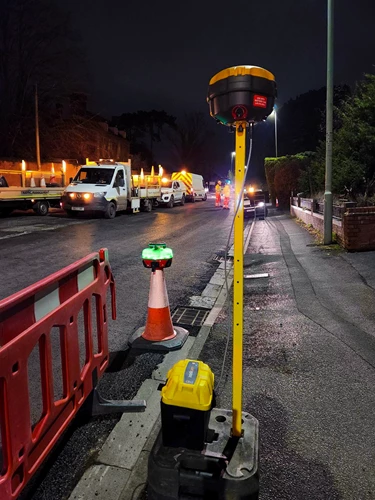
2.Your MyWorkZones platform creates a digital "Geozone" version of a worksite in real time. How much of a shift is that for traffic management companies that are still used to running sites on paper-based processes?
Our portal is simple and intuitive to use on a laptop, mobile phone or tablet – alerts can be sent via email, text or indeed viewed live. Every asset deployed on a site can be virtually viewed – this offers real time site oversight, enhancing visibility and reducing risk. Our reporting suite also offers that ‘next level’ reporting functionality to the end customer. Read more about MyWorkZones
3. The Intellitag has allowed some of your customers to move from having operatives on site around the clock to none, with real savings on fuel, wages and risk. Is full remote site monitoring now a realistic standard rather than an exception?
Intellitag® delivers a move from maintenance routines to event based activity. The units send SMS and email notifications if signs have fallen over. The benefits can be considerable particularly for works like diversion routes.
Event based maintenance takes vehicles and workers off the roads unless they need to carry out a specific task, reducing time, fuel and delivering carbon savings. . Again, the reporting tool within our portal offers data at the touch of a button – sign distribution, layout and status’, 24/7 over your chosen period of time. Read more online or view a case study.
4. You operate across highways, local authorities, utilities and rail. Are the safety challenges fundamentally different across those sectors, or is the underlying problem of keeping workers safe from vehicle incursion, essentially the same?
The challenges in all of our sectors are the same, maintaining a service to keep vital infrastructure working whilst doing so with the minimum of risk to those who undertake that work.
Our company mission is simple, to get people home safe and well every day. We ensure that every site we review alongside a customer focus on where technology can enhance safety and deliver that assurance.
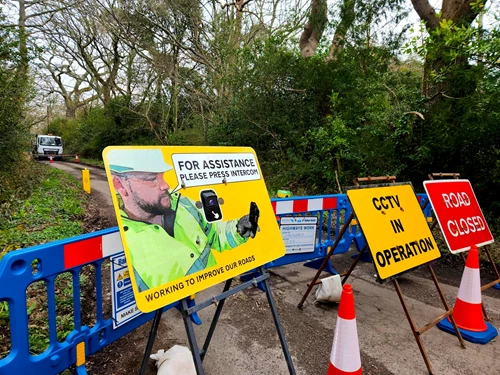
5. The Customer Communication Terminal is an interesting product in the range. What prompted that development?
The Customer Communication Terminal provides a recorded message about works that are taking place and can be used to connect a member of the public to a works supervisor for additional support to be offered.
It enables members of the workforce to be removed from potential confrontation points with members of the public, without reducing the support that is offered. Read more
6. Tragically workers continue to be killed or injured on our roads. How does that powerful and sobering fact still shape the way the company thinks about product development today?
It keeps us ruthlessly focused on outcomes. Every product decision comes back to one question: does this materially reduce the likelihood or severity of harm?
Our products are designed for the challenging environments road workers face every day, they must be easy to deploy, robust and effective.
We’re driven to challenge accepted risks, address blind spots and design technology that responds to real world failures, not theoretical ones.
7. We're seeing HRS technology deployed in Australia now as well as across the UK. What does international interest tell you about where the industry is globally when it comes to work zone digitalisation?
It tells us the challenges aren’t local, they’re universal. Everywhere, people are grappling with the same pressures: workforce safety, skills shortages, rising costs and increasing audit scrutiny. International uptake suggests the industry is ready to move from analogue safety controls to digital, data‑led approaches. The questions are no longer “should we?” but “how quickly can we?”
8. Traffex this year is very much focused on practical, implementation-ready solutions rather than future concepts. Where does HRS sit on that spectrum? are your products something a local authority or contractor can procure and deploy relatively quickly?
We offer proven systems that have been in operation across the UK for over a decade.
Local authorities and contractors already procure, install and integrate HRS technology quickly, delivering the combined benefits of improved safety and cost efficiencies.
For organisations that have not used our solutions before we offer on-site training and support during early deployments.
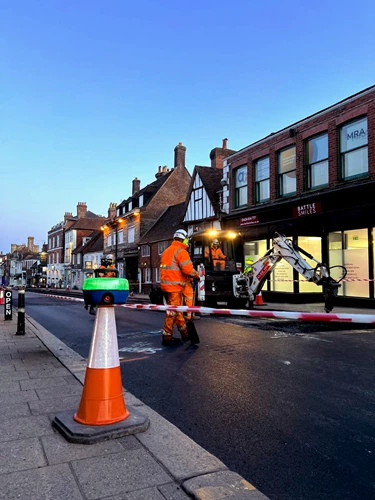
9. There's a broader conversation happening in the sector about the duty of care gap - the distance between what best practice looks like on paper and what actually happens on site. How much of HRS's proposition is about closing that gap?
Safety isn’t a choice. But, we must be conscious that solutions which just add cost will face far higher barriers to adoption. Our product range improves safety and can offer cost benefits for all parties involved. It is a true Win-Win
With 87% of road workers concerned about vehicle incursions, you can’t simply accept that risk.
The roads sector is like many others where safety equipment and methods are constantly evolving. You wouldn’t expect to see a worker not now wearing hi-vis PPE or a safety helmet ….. works supported with digital solutions are heading the same way.
10. What does good look like? If every roadworks site in the UK adopted your technology tomorrow, what would actually change for road workers and road users?
I’ll focus on the incursion prevention and warning system for this question.
94% of people working on the roads have witnessed an incursion, that is a scary but real statistic.
We know the feedback from teams that are using our system every day is that they feel safer on site knowing that our technology offers that extra layer of protection giving them vital time to get to a place of safety.
We also know the system also stops some incursions taking place.
Put simply, roadworkers feel a shift from constant physical danger to tech-enabled security, improving confidence for both road workers and road users.
Digitally enabled work sites also enable automated updates to satellite navigation systems about their presence, keeping road users informed in real time and enabling them to plan in advance.
We all have the same goal …… a great Uk infrastructure network, cost effective works, minimal disruption for members of the public and most important of all ……. Everybody getting home safe and well. Read more
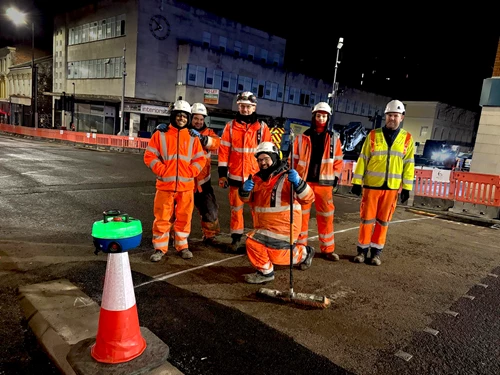
Visit Highway Resource Solutions on stand Stand B17 at Traffex 2026.
